
TRADITIONAL MAY DAY
MAY DAY is a public holiday usually celebrated on the 1st of May. It is an ancient Northern Hemisphere Spring festival and a traditional spring holiday in many cultures. Dances, singing, and cake are usually part of the festivities. In the late 19th century, May Day was chosen as the date for International Workers’ Day by the Socialists and Communists of the Second International to commemorate the Haymarket affair in Chicago (see below).
ENGLAND
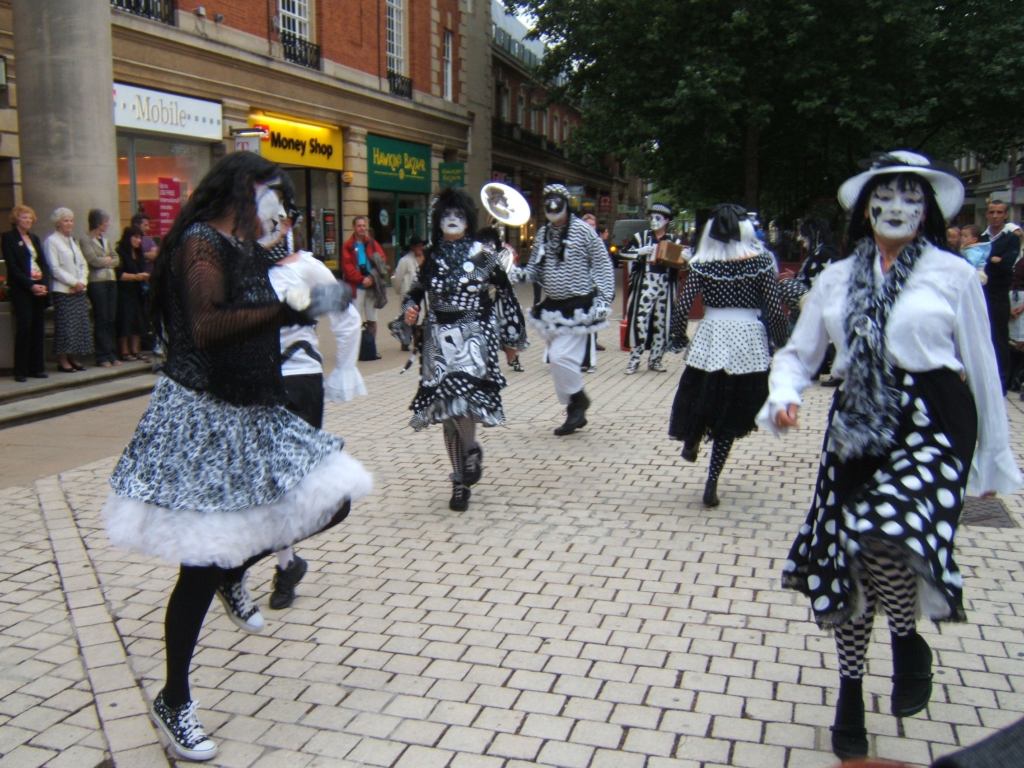
Traditional English May Day rites and celebrations include crowning a May Queen and celebrations involving a maypole, around which dancers often circle with ribbons. Historically, Morris dancing has been linked to May Day celebrations. The earliest records of maypole celebrations date to the 14th century, and by the 15th century the maypole tradition was well established in southern Britain.
The spring bank holiday on the first Monday in May was created in 1978; May Day itself – May 1 – is not a public holiday in England (unless it falls on a Monday). In February 2011, the UK Parliament was reported to be considering scrapping the bank holiday associated with May Day, replacing it with a bank holiday in October, possibly coinciding with Trafalgar Day (celebrated on October 21), to create a « United Kingdom Day ».
FRANCE
On 1 May 1561, King Charles IX of France received a lily of the valley as a lucky charm. He decided to offer a lily of the valley each year to the ladies of the court. At the beginning of the 20th century, it became custom to give a sprig of lily of the valley, a symbol of springtime, on 1 May.
The government permits individuals and workers’ organisations to sell them tax-free on that single day. Nowadays, people may present loved ones either with bunches of lily of the valley or dog rose flowers.
FÊTE DU TRAVAIL
Le Premier mai, est dans de très nombreux pays, le jour de la Fête du Travail (LABOUR DAY). Il est marqué par des défilés organisés par les syndicats de salariés, et dans les pays communistes par des défilés militaires et des organisations syndicales ou de jeunesse.

Gravure de 1886 parue dans le journal Harper’s Weekly représentant le drame de Haymarket Square à Chicago
L’agitation syndicaliste aux États-Unis
En 1884, aux États-Unis, le congrès des syndicats américains décide d’imposer aux patrons une limitation de la journée de travail à huit heures dans un délai de deux ans. Ils choisissent de débuter leur action le 1er mai, date du moving day parce que dans beaucoup d’entreprises américaines les contrats de travail se terminent ce jour-là ; le salarié doit déménager (moving day) pour retrouver du travail.
La grève générale du 1er mai 1886, animée par les anarchistes est suivie par environ 340 000 personnes. À Chicago, la grève se prolonge dans quelques entreprises. Le 3 mai 1886, une manifestation fait trois morts parmi les grévistes de la société McCormick Harvester. Le lendemain a lieu une marche de protestation et dans la soirée, tandis que la manifestation se disperse à Haymarket Square, il ne reste plus que 200 manifestants face à autant de policiers. Une bombe explose devant les forces de l’ordre, où elle fait un mort. Sept autres policiers sont tués dans la bagarre qui s’ensuit. Malgré l’inexistence de preuves contre eux, cinq anarchistes sont condamnés à mort (quatre seront pendus le vendredi 11 novembre 1887 (le Black Friday ou vendredi noir)) un se suicidera dans sa cellule. Trois autres sont condamnés à perpétuité.
En Amérique du Nord, à la suite de la distinction entre fête du Travail et fête des Travailleurs, le 1er mai n’est pas férié, bien qu’il soit très largement célébré par les syndicats ainsi que les partis, groupes et organisations de gauche ; cette fête est vue comme une journée de la célébration de la classe ouvrière.
MAY 8th or V-E DAY
May 8 refers to May 8, 1945, which marked the end of the Second World War in Europe. On that day, the Allies won the war and Nazi Germany capitulated. At 3 p.m. on May 8, 1945, bells began to ring throughout the country. » The war is won. Here is victory… » announced General de Gaulle in a radio message.
Representatives of the German High Command signed a new act of surrender in Berlin at 11:01pm on May 8, 1945, in the presence of representatives of the Union of Soviet Socialist Republics (USSR), the United States, the United Kingdom and France.
In France, May 8 was declared a public holiday on March 20, 1953. However, on April 11, 1959, the famous General de Gaulle decided to abolish the public holiday in the context of Franco-German reconciliation. It was not until 1981, with the arrival of François Mitterrand as President of the Republic, that May 8 was reinstated as a public holiday, with a law dated September 23, 1981.
In Great Britain, May 8th is called V-E DAY – Watch the video to know about it .